Admissions open for 2026-2027 batches.
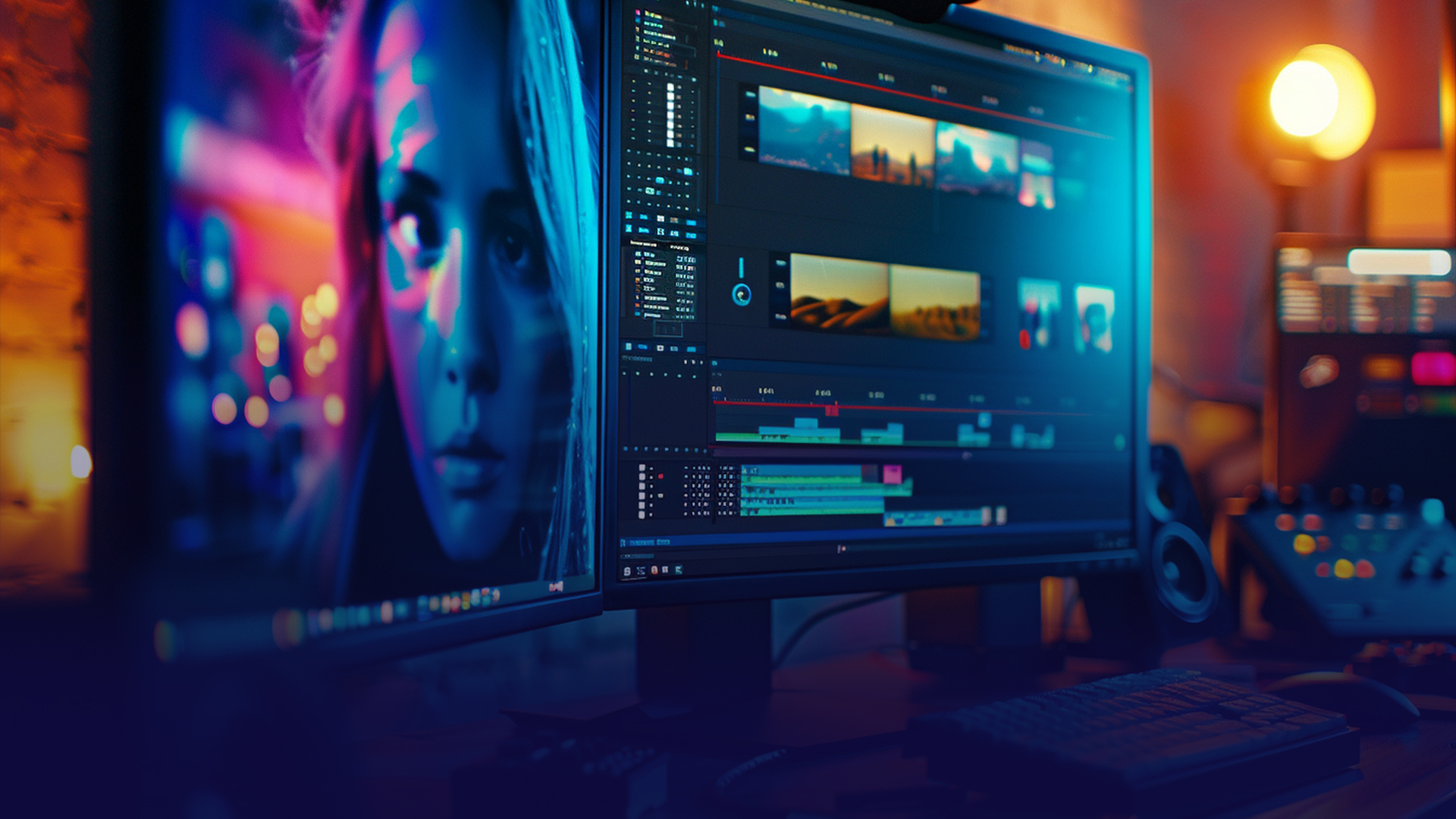
Master the Cut: Why Art Story India Offers the Premiere Video Editing Experience
In an era where video content dominates every screen, being a video editor isn't just about cutting clips anymore. It is about visual storytelling and technical mastery and professional finesse. At Art Story India, we don't just teach you how to use software; we transform you into a digital architect.
Here is why our course is widely recognized as the gold standard in the industry.
The "Full Spectrum" Curriculum
Most institutes teach you how to assemble a timeline and call it a day. We believe in the Full Package. A world-class editor needs to understand the assets they are working with and the complex compositing that happens after the first cut.
Our curriculum covers the essential tools that define the modern industry:
Adobe Premiere Pro: The industry standard for non-linear editing and storytelling.
DaVinci Resolve: Master the art of color grading and finishing to give your films a cinematic look.
Adobe After Effects: Dive into motion graphics and visual effects to add a professional "wow" factor to every frame.
Nuke: Learn the high-end node-based compositing used in Hollywood blockbusters and top-tier VFX houses.
Photoshop and Illustrator: Essential for creating custom textures and titles and vector assets that make your video unique.
Full Guidance from Concept to Export
Learning from a tutorial is one thing; learning from a mentor is another. At Art Story India, we provide Full Guidance throughout your creative journey.
We understand that the learning curve for software like Nuke or DaVinci can be steep. That is why our instructors are with you every step of the way. We help you troubleshoot technical glitches and refine your creative eye and build a workflow that is efficient and professional. You aren't just a student in a classroom; you are an apprentice in a creative studio.
Why the "Full Package" Matters for Your Career
The demand for "Generalist" editors is skyrocketing. Studios want someone who can edit the footage and fix the audio and color grade the shots and add the motion graphics. By mastering the suite of tools we offer at Art Story India, you make yourself indispensable. You aren't just applying for a job; you are offering a complete post-production solution.
From the foundations of Photoshop and Illustrator to the advanced compositing power of Nuke, we ensure you have every tool needed to succeed. Whether you want to work in film or advertising or content creation, our training provides the path to get there.
Get Started with Art Story India
Ready to start your journey and build your professional showreel? Connect with us today to learn more about our upcoming batches and enrollment details.
Website: www.artstoryoriginals.com
Phone: +91 6290 274 505
WhatsApp: +91 6290 274 505
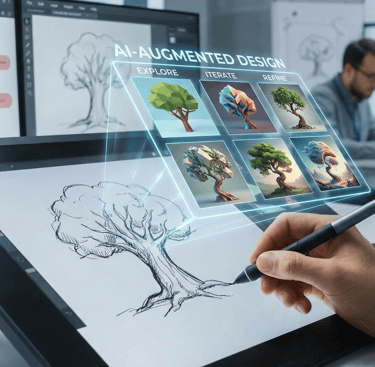
The Smart Way to Use AI in Your Design Portfolio (Without Looking Lazy)
It’s 2026. The debate over whether "AI is real art" is officially over in the professional world. Recruiters are no longer asking if you know about AI tools; they are asking how you use them to be faster, smarter and more creative.
If you’re a design student or junior designer right now, you are likely facing a massive dilemma:
If you don’t show AI skills, your portfolio looks outdated.
If you do show raw AI outputs, you look like you cheated or lack foundational skills.
The sweet spot—the thing that gets you hired right now—is showing that you are an "AI-Augmented Designer." You need to prove that you are the director and AI is your very talented, very fast assistant.
Here is how to integrate AI into your case studies the right way and how to position yourself for the hybrid creative roles of the future.
1. Show AI in the "Messy Middle," Not the Final Polish
The biggest mistake juniors make is posting a Midjourney-generated image as a final piece of "concept art." Recruiters see right through this.
Instead, show AI in your process section.
Use AI tools to generate 50 mood board variations in ten minutes. Screenshot that chaos. Then, show the sketch you made by combining the color palette of one generated option with the composition of another.
The Portfolio Caption: "I used Midjourney to rapidly explore art directions, generating 30 iterations before selecting three key visual pillars to inform my final manual design."
Why this works: It shows you use AI for velocity and divergence, but human judgment for convergence and selection.
2. Use AI for the "Boring Stuff"
(Workflow Optimization)
Designers spend too much time on non-design tasks. Showing that you use AI to automate these tasks demonstrates maturity and business sense.
Don't use "Lorem Ipsum." Use ChatGPT to generate contextual placeholder copy that matches the brand's tone. Use AI upscalers to fix low-res client assets. Use Photoshop’s Generative Fill to extend backgrounds so you can focus on the main subject.
The Portfolio Caption: "To accelerate the high-fidelity prototyping phase, I utilized ChatGPT for on-brand placeholder copy and generative fill for rapid image contextualization, allowing me to focus my energy on refining user flows."
Why this works: It shows recruiters you care about efficiency and know how to prioritize your creative energy.
3. Show the "Human Handshake"
(Before vs. After)
If you use AI to generate a core visual component, you must show how you manually refined it.
Did you generate a 3D icon in Blender using an AI texture generator? Great. Show the raw output, and then show the final version where you manually adjusted the lighting, cleaned up the mesh and integrated it into the final UI.
The Goal: Prove that the AI output was just a raw ingredient and your design expertise was the recipe that made it usable.
The Next Step: Mastering the Tools of 2026
Knowing how to write a prompt is a good start, but real career security comes from mastering the industry-standard software that powers the design world, and then supercharging it with AI.
The designers getting the best jobs—the "Creative Technologists" and "Product Design Leads"—understand the deep technical architecture of design.
How Our Course at Art Story India Helps You Grow
At Art Story India, we don’t just teach you to press buttons. We provide an industry-ready curriculum that blends the "Scientific" (Software) with the "Artistic" (AI & Creativity).
Our specialized tracks, including Advanced Cinematic Design Learning, Game Design and UI/UX, ensure you master the complete professional stack:
Core Graphic & UI Stack: Master Adobe Photoshop, Adobe Illustrator, Adobe InDesign and Figma to build pixel-perfect brands and interfaces.
Motion & Cinematic Stack: Dive deep into Adobe Premiere Pro and Adobe After Effects for high-end video production and motion graphics.
3D & Immersive Tech: Learn Autodesk Maya and Unreal Engine to create industry-standard 3D assets and real-time environments for games and virtual production.
Why this matters for your AI journey: You cannot effectively control AI if you don't understand the fundamentals. We teach you the manual mastery of these powerful tools so that when you use AI—whether it's Generative Fill in Photoshop or AI-driven rendering in Unreal Engine—you are doing it with the precision of a pro, not a guesser.
The takeaway: The designers who will thrive in the next decade aren't the ones hiding from machines. They are the ones who learn to speak their language while mastering the tools that build our visual world.
How to prepare for NID/NIFT/UCEED entrance exams?
Cracking the Code: Your Ultimate Guide to NID, NIFT, & UCEED Entrance Exams (with a Secret Weapon!)
Dreaming of a career where creativity knows no bounds? Do you sketch, innovate, and see the world through a designer's lens? Then the National Institute of Design (NID), National Institute of Fashion Technology (NIFT), and Undergraduate Common Entrance Exam for Design (UCEED) are likely on your radar. These prestigious institutions are the gateways to a thriving career in design and fashion, but their entrance exams are notoriously competitive.
Fear not, aspiring designers! This will equip you with a comprehensive strategy to prepare for these crucial exams.
Understanding the Beasts: NID, NIFT, & UCEED
While all three lead to design careers, their focus and exam patterns differ significantly.
1. NID (National Institute of Design): The Holistic Innovator
* Focus: Product Design, Communication Design, Textile Design, etc. NID emphasizes innovation, critical thinking, and a strong understanding of design principles.
* Exam Pattern:
* DAT Prelims (Design Aptitude Test): Assesses your observation skills, creativity, visualization, analytical reasoning, and general design awareness. This section often includes drawing, sketching, and problem-solving questions.
* DAT Mains: For those who clear Prelims, this involves a Studio Test (hands-on material manipulation, model making, or sketching) and an Interview/Portfolio review.
2. NIFT (National Institute of Fashion Technology): The Fashion Forward
* Focus: Fashion Design, Textile Design, Fashion Communication, Accessory Design, etc. NIFT hones skills in fashion sensibility, trend forecasting, and practical application.
* Exam Pattern:
* CAT (Creative Ability Test): Evaluates intuitive ability, power of observation, design ability, and illustration skills. You'll often be asked to draw and color based on given scenarios.
* GAT (General Ability Test): Covers quantitative ability, communication ability, English comprehension, analytical ability, and general knowledge/current affairs related to fashion.
* Situation Test (for B.Des): A hands-on test where you'll create a 3D model using provided materials based on a given problem.
* Group Discussion & Personal Interview: Assess communication skills, general awareness, career orientation, and suitability for the program.
3. UCEED (Undergraduate Common Entrance Exam for Design): The Foundation Builder
* Focus: B.Des programs in IITs (Bombay, Delhi, Guwahati, Hyderabad, Jabalpur) and other participating institutions. UCEED primarily assesses aptitude for design.
* Exam Pattern: A single, comprehensive exam with two parts:
* Part A: Computer-based test with Numerical Answer Type (NAT), Multiple Select Questions (MSQ), and Multiple Choice Questions (MCQ) covering visualization, spatial ability, environmental and social awareness, analytical and logical reasoning, language and creativity, and design thinking and problem-solving.
* Part B: A drawing question that evaluates sketching, creativity, observation, and visual communication.
Your Strategic Study Blueprint
Now that you understand what you're up against, let's craft a winning strategy:
Phase 1: Build Your Foundation (Months 1-3)
1. Sketching & Drawing Fundamentals: This is non-negotiable for all three exams. Practice daily! Focus on:
* Perspective: 1-point, 2-point, 3-point.
* Human Anatomy: Basic figures, gestures, proportions.
* Object Drawing: Still life, everyday objects, textures.
* Composition: How elements are arranged in a drawing.
* Shading & Rendering: Creating depth and realism.
* Color Theory: Understanding color palettes, harmony, and contrast.
* Practice: Draw from observation, photographs, and imagination.
2. Develop Design Thinking: Start looking at the world like a designer.
* Observe: How are products designed? What problems do they solve?
* Question: Why is something designed the way it is? How could it be better?
* Brainstorm: Think of multiple solutions to everyday problems.
* Read: Explore design blogs, magazines, and books. Familiarize yourself with design history and famous designers.
3. Enhance General Knowledge & Current Affairs: Especially for NIFT and UCEED.
* Read newspapers and magazines regularly.
* Focus on art, design, fashion, and cultural events.
* Be aware of current trends and prominent figures in these fields.
Phase 2: Targeted Practice & Refinement (Months 4-6)
1. Solve Previous Year Papers: This is crucial. It familiarizes you with the exam format, question types, and time management.
* Identify your weak areas and work on them.
* Practice within strict time limits.
2. Creative Ability & Situation Test Practice:
* NIFT CAT/Situation Test: Practice drawing human figures, garment draping, accessory design, and creating 3D models with various materials (cardboard, wire, fabric scraps).
* NID DAT: Focus on imaginative drawing, storytelling through visuals, and abstract problem-solving.
3. Develop a Portfolio (NID DAT Mains): Start building a collection of your best creative work. This could include sketches, paintings, photographs, crafts, digital art, or even small design projects.
* Showcase your versatility and unique perspective.
4. Mock Tests: Take as many full-length mock tests as possible. This simulates the actual exam environment and helps you refine your strategy.
Phase 3: The Final Push (Last 1-2 Months)
1. Revision: Go over all the concepts, formulas (for GAT), and drawing techniques.
2. Time Management: During mock tests, meticulously track how long you spend on each section. Optimize your speed and accuracy.
3. Interview Practice (NID/NIFT):
* Research the institutions and their programs.
* Prepare answers to common questions about your interests, aspirations, and design philosophy.
* Be ready to discuss your portfolio in detail.
4. Stay Calm and Confident: A positive mindset goes a long way. Trust in your preparation.
The Art Story India Advantage: Your Secret Weapon for Success!
While self-study is important, personalized guidance can be the differentiator between good preparation and truly outstanding results. At Art Story India, we understand the nuances of these highly competitive exams and offer a unique, results-driven approach.
We provide individual (1:1) training for ALL Art and Design Colleges in India and abroad!
Our philosophy is simple: Your success is our priority.
Here's why Art Story India stands out:
* 1:1 Personalized Mentorship: Forget crowded classrooms! Our core strength lies in individualized attention. You'll work directly with a dedicated mentor who understands your strengths, weaknesses, and learning style.
* Expert Faculty: Learn from the best! Our team comprises experienced professors from top design institutions and practicing industrialists who bring real-world insights and cutting-edge knowledge directly to you.
* Holistic Curriculum: We cover every aspect of the NID, NIFT, and UCEED syllabi, including:
* Intensive sketching and drawing techniques.
* Design thinking and problem-solving.
* Creative Ability Test (CAT) and Design Aptitude Test (DAT) strategies.
* General Ability Test (GAT) preparation.
* Situation Test guidance and hands-on practice.
* Portfolio development and refinement.
* Interview preparation and mock interviews.
* Tailored for Your Dreams: Whether you're aiming for Product Design at NID, Fashion Communication at NIFT, or B.Des at an IIT, our training is specifically designed to meet the requirements of your chosen program and institution.
* Global Reach: Aspiring to study design abroad? We also offer specialized training to help you gain admission to leading international art and design universities.
Don't leave your design dreams to chance. The journey to NID, NIFT, or UCEED is challenging, but with the right strategy and the unparalleled support of Art Story India, you can unlock your full creative potential and secure your spot in a top design institution.
Call today to learn more about our 1:1 individualized training programs and start your path to design excellence!
MCR Super Speciality Polyclinic & Pathology: Quality Healthcare Meets Affordability in Behala
Finding a healthcare provider that balances expert medical care with reasonable pricing can be a challenge. However, for residents of South Kolkata, MCR Super Speciality Polyclinic & Pathology has quickly become the premier destination for comprehensive medical services without the "super speciality" price tag.
Located conveniently near the Behala Tram Depot (right beside Ellora Cinema), this facility offers an impressive range of medical specialities and diagnostic services under one roof.
Meet the Experts: Doctors at MCR
MCR is home to over 40 esteemed doctors across more than 75 specialities. Here are some of the key professionals associated with the clinic:
General Medicine & Internal Medicine: Dr. Pinaki Mukhopadhyay, Dr. Santanu Mandal, Dr. Soumen Paul, Dr. Tapabrata Ray, and Dr. Arif Ahmed.
Oncology (Cancer Care): Dr. Sanchayan Mandal (Medical Oncologist) and Dr. Anindita Ray (Radiation Oncologist).
Dermatology & Cosmetology: Dr. Sonal Jain, Dr. Kaushiki Hajra, Dr. Somshukla Ray, Dr. Priyankar Mishra, and Dr. Sushil Singh.
Neurology: Dr. Uddalak Chakraborty.
Psychiatry: Dr. Debdatta Pati, Dr. Ankit Halder, and Dr. Sujit Sarkhel.
Cardiology: Dr. Suman Halder.
Urology: Dr. Soumya Mondal and Dr. Gaurab Dasgupta.
Gynaecology & Obstetrics: Dr. Millie Dasgupta.
Pediatrics: Dr. Dikpati Mukherjee.
Orthopaedics: Dr. Atanu Bera, Dr. Rupam Chowdhury, and Dr. Sudipta Saha.
Endocrinology: Dr. Arunava Ghosh.
Pulmonology: Dr. Tamal Bhattacharyya.
Dentistry: Dr. Spandan Daschowdhury.
Comprehensive Services Offered
MCR Super Speciality is designed to be a one-stop healthcare hub, ensuring patients don't have to visit multiple centers for different needs.
Medical Consultations From routine checkups with general physicians to complex consultations with super-specialists in oncology, nephrology, and neurology, the clinic provides expert guidance for all age groups.
Advanced Diagnostics & Pathology The clinic features a high-tech pathology lab for all types of blood, urine, stool, and specialized tests. Advanced diagnostic tools include:
Neurology Tests: EEG, EMG, and NCV.
Cardiac Monitoring: ECG and 24-48 hour Holter Monitoring.
Pulmonology: PFT (Pulmonary Function Test) for asthma and COPD.
Urology: Uroflowmetry to assess bladder health.
Supportive Care & Wellness
Physiotherapy: Personalized programs for injury recovery and chronic pain management.
Nutrition: In-house Dietitians for diabetes management and weight loss.
Critical Injections: Safe administration of IV and IM injections by trained staff.
Patient-Centric Home Services For those who cannot travel, MCR provides Home Blood Collection and home-based physiotherapy, bringing professional care directly to your doorstep.
Affordability & Accessibility
MCR bridges the gap between high-end care and local affordability. With transparent pricing and specialized Health Packages, it ensures quality healthcare is accessible to every budget.
Address: 11A, Sourin Roy Rd, Tram Depot (Beside Ellora Cinema), Behala, Kolkata - 700034.
Timings: Monday to Saturday (8:00 AM – 8:00 PM), with Sunday slots available.
Government Registered
Transforming passion into professional success through design.
Copyright© 2025. artstoryindia.com. All rights reserved.

Address: Thakurpukur Kolkata 700104
Contact: +91 6290274505
Email: contact@artstoryindia.com
Quick Links:
Courses
About Us
FAQ